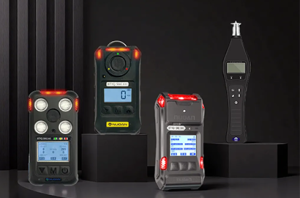
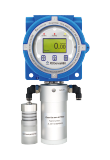


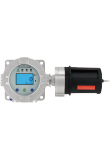
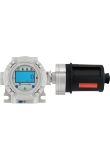
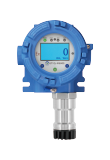


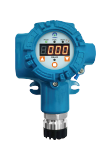
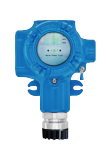
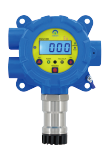
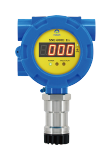
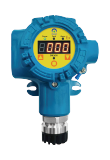


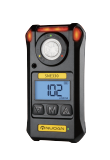
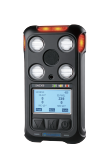
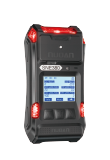

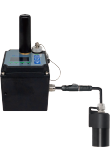


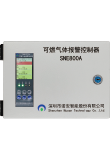

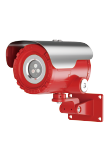
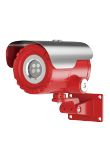
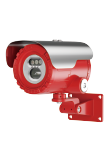

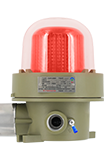
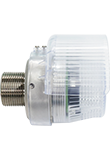
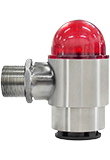

With the advancement of domestic gas sensing technology, the variety of gas detection and alarm devices installed in relevant facilities has expanded significantly, offering broader selection options. However, challenges such as false negatives, false positives, short lifespan, and high maintenance costs have emerged. For instance, some detectors exhibit cross-sensitivity to similar gases, leading to frequent false alarms, or require frequent replacement and calibration, resulting in substantial long-term maintenance expenses. In addition to the varying quality of products from different brands, the diverse application scenarios of gas detectors based on different detection principles also necessitate tailored selection and installation requirements for different gas environments.
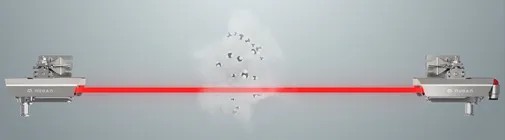
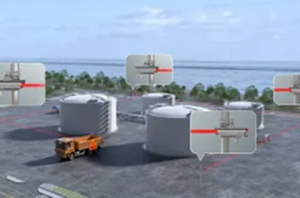
The emergence of laser gas detectors based on TDLAS detection principles has addressed some of the aforementioned common issues. The “Design Standard for Combustible Gas and Toxic Gas Detection and Alarm in Petrochemical Industry” (GB/T 50493-2019), issued in 2019, clearly stipulates that in areas with special climatic or production environments, or in open spaces requiring monitoring, line-type combustible gas and toxic gas detectors should be selected. For open monitoring areas such as the periphery of production facilities, facility passageways, tank farms, large warehouses, loading and unloading zones, and pipe racks, line-type combustible gas and toxic gas detectors are recommended. The implementation of this standard policy has also driven the advancement of domestic linear gas detection technology.
01 Laser Line Type, Superior Performance
TDLAS (Tunable Diode Laser Absorption Spectroscopy) is a tunable semiconductor laser absorption spectroscopy technique that utilizes near-infrared spectral absorption of gas molecules. By employing laser wavelength scanning detection, it precisely tunes to target gas absorption lines while eliminating interference from other gases, enabling highly selective detection. With exceptional sensitivity, TDLAS can detect methane at ultra-low concentrations, typically in the ppm (parts per million) or even ppb (parts per billion) range. The technology also features zero-drift intelligent reference calibration, ensuring no false alarms and broad applicability for detecting gas leaks. Additionally, TDLAS’s ultra-short response time—achieved through rapid laser tuning—makes it ideal for real-time measurements within milliseconds, allowing continuous monitoring of gas concentration changes in dynamic environments. The non-contact measurement advantage eliminates direct gas contact, reducing equipment wear and maintenance costs.
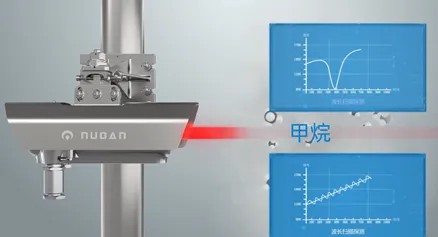
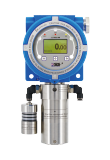
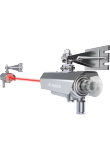
The beam-probe laser methane gas detector by Nuonan Intelligence employs TDLAS technology, demonstrating outstanding performance in interference resistance, poisoning resistance, response speed, and detection accuracy.
High stability: zero drift and false alarm-free, with intelligent zero-point calibration.
Fast response: Non-contact reaction with a response time of 3 seconds.
High anti-interference capability: Equipped with built-in anti-interference algorithms, it performs reliably in harsh environments including extreme temperatures, rain, fog, and intense sunlight.
Intelligent diagnostic function: Detects condensation on optical windows, optical path obstructions, and laser status; automatically controls temperature for water removal with alarm alerts.
No gas-sensitive materials, no loss, long core component lifespan, and modular replaceability;
The system operates normally in hypoxic/anoxic conditions, and the optical absorption process does not require oxygen participation.
02 Precision detection, technological leadership
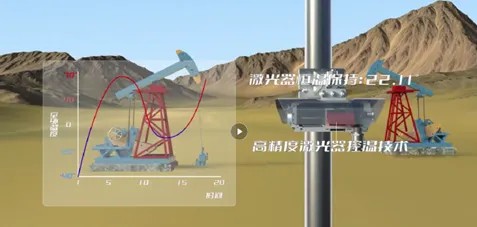
Laser gas detectors utilize wavelength scanning of the laser for detection. The wavelength of the laser is influenced by both current and temperature factors. The linear beam methane gas detector developed by Noah Intelligence has overcome the technical challenge of high-precision laser temperature control across a wide temperature range. Within an operating temperature range of -40 to 70°C, it achieves precise temperature control of the laser, enabling rapid detector response and ensuring accurate detection.
In open environments, external interference factors such as water vapor, dust, and ambient light can significantly reduce the light signal intensity detected by photoelectric detectors, thereby affecting measurement accuracy. Nuoyan Intelligent’s linear methane gas detector employs intelligent amplification processing for received light signals, minimizing measurement deviations caused by external interference. The system has overcome the technical challenge of “real-time laser status monitoring and real-time calibration of measurement results.” Equipped with an integrated reference gas chamber, the detector enables real-time calibration and smart diagnostics of laser functionality, ensuring reliable measurement outcomes.
03 Widely applicable with safety as a companion
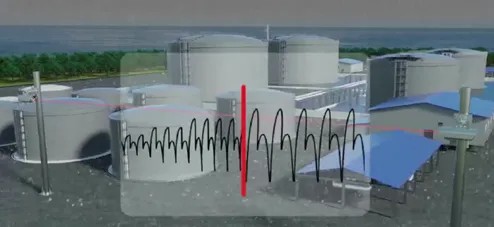
In summary, due to their technical and performance advantages, laser methane gas detectors feature broad application scopes and excellent detection effectiveness. They are widely applicable across industrial fields such as oil and gas extraction, petroleum refining, coal mines, gas transportation, and natural gas storage, as well as for methane and gas leakage detection in residential and commercial settings. Particularly in complex environments with significant safety hazards—such as hazardous material tank farms, pipeline corridors, and underground coal mines—or in scenarios with multiple interfering environmental factors like extreme temperatures, high dust, or high salt spray, laser gas detectors can respond rapidly, issue timely alarms, and thereby ensure the safety and well-being of personnel and assets. Traditional methane detection methods, such as catalytic combustion sensors, suffer from drawbacks including slow response times, low accuracy, and susceptibility to environmental interference. In specific scenarios like long-distance pipeline monitoring or real-time surveillance in complex environments, traditional technologies often prove inadequate.
When installing gas detectors in natural gas pipelines, traditional sensors often failed to detect methane leaks in time due to their slow response and susceptibility to environmental factors, creating safety hazards. By deploying open-circuit laser methane detectors along the pipeline, their long-range monitoring capability enabled real-time tracking of methane concentration changes. During a minor pipeline leak incident, the detectors triggered an alarm within seconds of the leak occurring, allowing staff to take immediate action and successfully prevent the accident.
With the continuous advancement of technology, laser gas detectors are expected to achieve breakthroughs in several areas. This includes further improvements in sensitivity and accuracy, enabling the detection of even lower concentrations and meeting increasingly stringent environmental and safety standards. Simultaneously, enhancing their intelligence will be a major trend in future development. By integrating Internet of Things (IoT) technology, gas detectors can achieve remote monitoring, data analysis, and flexible alarm functions, thereby further enhancing system reliability and convenience. Their physical designs will also be optimized, allowing for broader adoption across more scenarios. For example, miniaturized devices can be deployed in residential and commercial settings, providing more comprehensive safety assurance.